
Future top Ad Unit
Professional Integration Pending
Quick Risk Summary
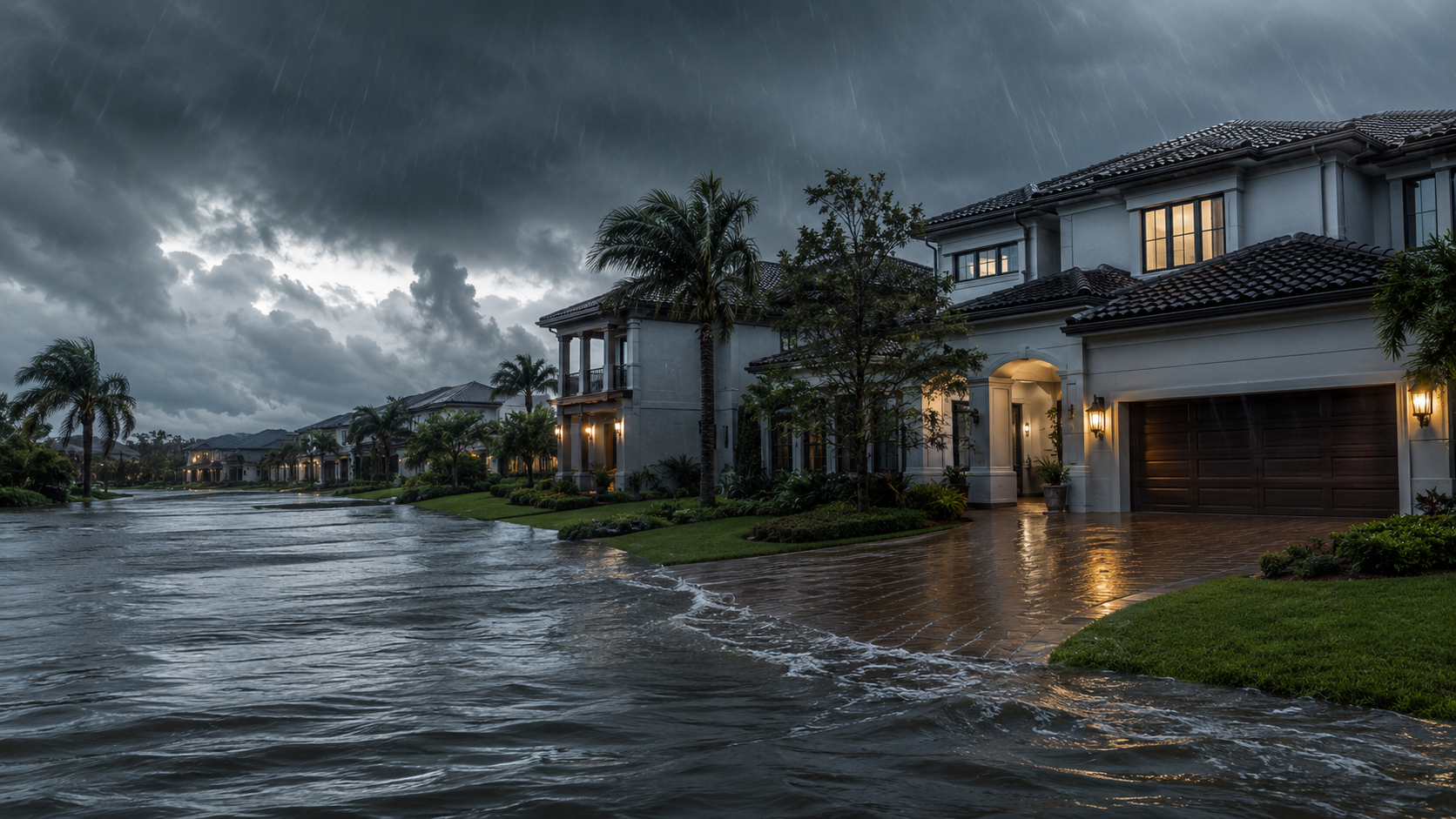
Flooding remains one of the most expensive and disruptive natural hazards affecting homeowners across the United States. And during hurricane season, flood losses often come from water — not wind.
Many property owners still underestimate how quickly flood conditions can develop. A neighborhood that rarely sees standing water can suddenly experience severe drainage overflow after hours of heavy rainfall, storm surge, or nearby river swelling. In coastal states, inland flooding has become increasingly common during slow-moving tropical systems.
The challenge is that flood damage is rarely limited to dramatic catastrophic events. Even a few inches of water entering a home can damage flooring, drywall, electrical systems, appliances, HVAC equipment, and personal belongings. Cleanup costs can escalate fast, especially when mold remediation becomes necessary.
The good news is that practical flood damage prevention measures taken before hurricane season can meaningfully reduce both physical damage and financial stress.
Key Takeaways
- Flood risk is not limited to coastal waterfront homes.
- Standard homeowners insurance usually does not cover flood damage.
- FEMA flood zones provide important baseline risk information, but they are not perfect predictors.
- Simple upgrades like improving drainage and elevating utilities can significantly reduce losses.
- Hurricane flood preparedness works best when completed before storms are active in the forecast.
- Home buyers should evaluate flood history and insurance requirements before purchasing property.
Main Article
Why Flood Damage Often Catches Homeowners Off Guard
One of the biggest misconceptions about hurricanes is that wind causes the majority of residential losses. In reality, water intrusion is frequently the more financially devastating problem.
Floodwater moves differently than people expect. It can enter through doors, foundation cracks, garage openings, sewer systems, or overwhelmed drainage infrastructure. In some cases, the issue is not direct river flooding at all — it is localized stormwater accumulation that has nowhere to go.
This is especially true in rapidly developed suburban areas where natural drainage patterns have changed over time.
A homeowner may spend years focused on roof maintenance and storm shutters while overlooking lower-level vulnerabilities like grading, gutters, sump systems, or outdated drainage design.
That gap becomes critical during hurricane season.
The strongest flood protection strategies are usually not dramatic renovations. They are smaller, layered decisions made early.
Start With Your Property’s Real Flood Exposure
Before spending money on upgrades, homeowners should first understand how vulnerable the property actually is.
Checking FEMA flood zones is a useful starting point, but it should not be treated as the entire picture.
A home outside a high-risk FEMA designation can still experience flooding from:
- Urban drainage overflow
- Flash flooding
- Heavy rainfall events
- Nearby creek expansion
- Storm surge migration
- Aging municipal infrastructure
This matters because many homeowners outside official high-risk zones assume flood insurance is unnecessary. Yet FEMA has repeatedly noted that a significant percentage of flood claims come from lower-risk areas.
For buyers, reviewing flood history is equally important. Ask about prior water intrusion, insurance claims, drainage modifications, and whether nearby streets flood during major storms.
Satellite maps and local elevation changes can also reveal hidden exposure patterns that standard listing descriptions never mention.
Improve Drainage Before Hurricane Season Arrives
One of the most effective forms of home flood protection is also one of the least glamorous: controlling where water flows around the property.
Poor drainage creates compounding problems during intense rainfall.
Start by inspecting gutters and downspouts. Overflowing gutters can dump large amounts of water directly near the foundation. Downspouts should extend far enough away from the home to prevent pooling.
Grading matters too. Soil should slope away from the structure rather than toward it. Even subtle grading issues can become significant during prolonged storms.
Homeowners in flood-prone regions increasingly install:
- French drains
- Catch basins
- Sump pumps with battery backup
- Backflow prevention valves
- Permeable landscaping features
These upgrades are not always inexpensive, but they are often far cheaper than major flood remediation.
Landscaping also plays a surprisingly important role. Large paved surfaces reduce water absorption and increase runoff speed. Strategic vegetation and drainage-friendly landscaping can help slow accumulation around the property.
Elevate What You Can
One of the most practical flood damage prevention strategies is simple elevation.
In many homes, critical systems are located near ground level because it is convenient — not because it is safe.
During flooding, homeowners frequently lose:
- Electrical panels
- HVAC systems
- Water heaters
- Washers and dryers
- Storage contents
- Garage equipment
Elevating utilities above expected flood levels can substantially reduce repair costs.
For homes in higher-risk areas, contractors may recommend raising major systems onto platforms or relocating them to upper floors where possible.
Even smaller changes matter. Storing important documents, backup drives, and emergency supplies above floor level reduces preventable loss.
Garages deserve special attention. They are often the first area where water enters, particularly in suburban developments with sloped driveways.
Understand The Limits Of Your Insurance
Many homeowners discover insurance gaps only after flooding occurs.
Standard homeowners policies typically do not include flood insurance coverage. Water damage from rising external floodwater is usually treated separately under National Flood Insurance Program (NFIP) policies or private flood insurers.
This distinction surprises many property owners.
For example:
Future mid Ad Unit
Professional Integration Pending
- Rain entering through storm-created roof damage may be covered.
- Rising floodwater entering the home from outside usually is not.
The details matter.
Before hurricane season, homeowners should review:
- Flood deductibles
- Coverage limits
- Waiting periods
- Basement limitations
- Personal property coverage
- Temporary housing provisions
Flood insurance often includes waiting periods before activation, meaning coverage cannot simply be purchased once a storm is already approaching.
Property buyers should also understand lender requirements. Homes located within certain FEMA flood zones may require flood insurance for federally backed mortgages.
Even if not required, voluntary coverage may still make financial sense depending on local exposure.
Risk Explanation
Why Flooding Is Becoming More Expensive
Flood losses have become more complicated in recent years for several reasons.
Homes now contain more expensive electronics, connected systems, and finished lower-level spaces than older generations of housing stock. Water intrusion that once damaged basic flooring may now affect smart home systems, integrated HVAC controls, or finished basements with thousands of dollars in furnishings.
Construction patterns also contribute to exposure.
Rapid suburban expansion has increased impermeable surfaces like roads, parking lots, and dense residential developments. Water moves faster through these environments than through natural terrain.
At the same time, some drainage systems were not designed for the intensity of modern rainfall events.
Hurricane flood preparedness today therefore requires a broader mindset than simply boarding windows or stocking bottled water.
Water management is becoming a core part of long-term property resilience.
FEMA Flood Zones Are Useful — But Not Absolute
FEMA flood zones remain an important planning tool, especially for insurance and mortgage decisions.
However, flood maps are not static risk guarantees.
Some communities experience development changes faster than flood maps are updated. Others face evolving rainfall patterns that produce flooding outside traditionally expected areas.
Homeowners should treat FEMA flood zones as foundational guidance rather than a complete risk prediction model.
Additional factors matter:
- Local topography
- Drainage infrastructure
- Nearby retention ponds
- River proximity
- Elevation changes
- Historical flood patterns
- Stormwater management quality
This is one reason property-specific flood risk analysis has become increasingly valuable for buyers and owners alike.
Insurance & Property Implications
Flood History Can Affect Property Value
Flood exposure increasingly influences homebuyer behavior.
In some markets, buyers are paying closer attention to:
- Previous flood claims
- Repetitive loss properties
- Insurance affordability
- Evacuation zones
- Long-term climate resilience
A property with unresolved drainage issues can become harder to insure or more expensive to maintain over time.
Sellers who proactively improve flood resilience may place themselves in a stronger position during future transactions.
Documentation also matters. Keeping records of drainage upgrades, inspections, and mitigation work can help support insurance discussions and improve buyer confidence later.
Insurance Costs May Continue To Shift
Flood insurance pricing has evolved significantly in recent years.
Some homeowners have seen premium increases tied to updated risk modeling, replacement costs, or revised flood exposure assessments.
Because of this, waiting until after repeated flooding occurs can become financially painful.
Reviewing flood insurance coverage before hurricane season allows homeowners to compare options while there is still time to make informed decisions calmly rather than reactively.
Preparedness Recommendations
Focus On Layered Protection
The most effective home flood protection strategy usually combines multiple smaller improvements rather than relying on one major solution.
That may include:
- Improving drainage
- Clearing gutters regularly
- Installing water sensors
- Using flood barriers where appropriate
- Elevating utilities
- Reviewing insurance coverage
- Creating emergency documentation backups
Preparedness is rarely about eliminating all risk entirely.
It is about reducing avoidable damage and improving recovery speed.
Build A Realistic Hurricane Season Plan
Emergency planning should be practical, not performative.
A strong hurricane flood preparedness plan includes:
- Knowing evacuation routes
- Protecting important documents
- Photographing valuables
- Backing up digital records
- Understanding shutoff locations for utilities
- Preparing temporary power solutions if appropriate
Families should also discuss communication plans ahead of time. Cellular service disruptions are common during major storm events.
Simple preparation decisions made weeks earlier often become extremely valuable under real-world pressure.