

Future top Ad Unit
Professional Integration Pending
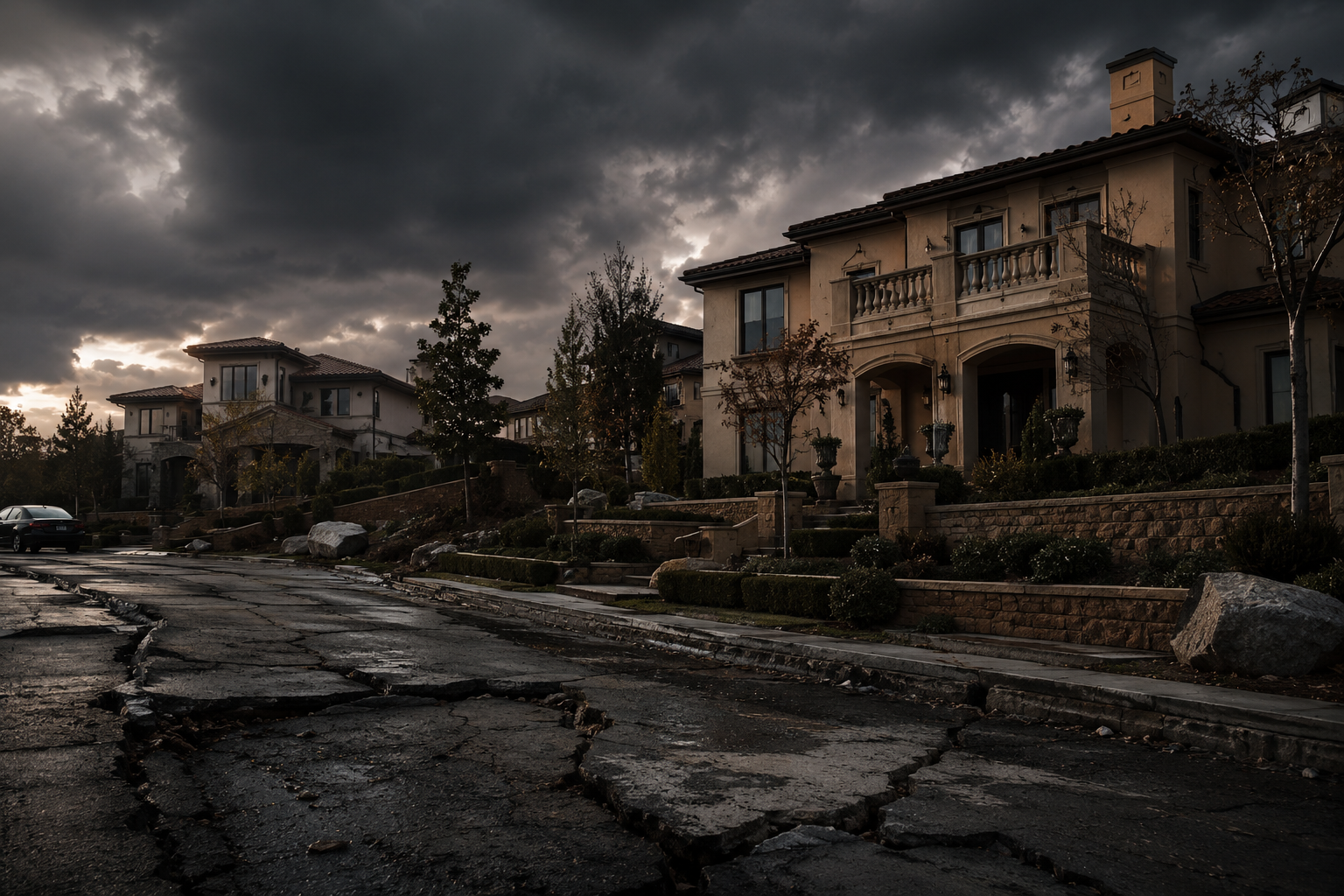
For millions of Californians, earthquakes exist somewhere in the background of everyday life.
People know the risk is there. Fault lines run beneath cities, highways, and suburbs across the state. Minor tremors happen often enough that many residents barely react anymore. But the real danger isn’t the small earthquake that rattles dishes for a few seconds. It’s the possibility of a larger seismic event that arrives without warning and disrupts entire communities within moments.
For homeowners, earthquake risk is more than a geological issue. It’s a financial, structural, and personal safety concern that can affect everything from insurance costs to long-term property value.
And despite California’s reputation for seismic awareness, many households remain underprepared for what a major earthquake could actually mean.
California’s Earthquake Risk Is Broad, Not Localized
When people think about earthquake danger in California, they often focus on San Francisco or Los Angeles. But seismic risk extends far beyond those cities.
California contains hundreds of active faults, including the San Andreas Fault system, Hayward Fault, San Jacinto Fault, and numerous smaller fault networks spread across the state. Earthquakes can affect coastal communities, inland suburbs, mountain regions, and densely populated urban corridors alike.
The challenge is that earthquakes do not follow predictable schedules.
Unlike hurricanes or severe storms, there is usually no meaningful advance warning. A major quake can occur in the middle of the night, during rush hour, or on an otherwise ordinary afternoon.
That unpredictability changes how homeowners should think about preparation.
Not All Homes Face The Same Level Of Risk
Two homes located in the same city can experience very different levels of damage during the same earthquake.
Construction type matters enormously.
Older homes built before modern seismic codes may be more vulnerable to structural shifting, foundation separation, or wall collapse. Soft-story buildings — structures with large open ground floors such as garages — can be especially susceptible during strong shaking.
Soil conditions also play a major role.
Homes built on soft sediment, reclaimed land, or unstable hillsides may experience amplified shaking compared to properties anchored on more stable ground. In some areas, liquefaction becomes a serious concern during major seismic events. This occurs when water-saturated soil temporarily behaves like liquid, destabilizing foundations and roads.
That’s why earthquake risk assessments are often highly location-specific, even within the same neighborhood.
Earthquake Damage Is Often More Complex Than People Expect
Many homeowners imagine earthquake damage as dramatic structural collapse. While that can happen during severe events, more common damage is often slower, costlier, and harder to fully repair.
Earthquakes can trigger:
- Foundation cracks
- Chimney collapse
- Roof damage
- Broken gas lines
- Electrical fires
- Burst plumbing
- Interior wall separation
- Water intrusion from damaged pipes
Even moderate shaking can create thousands of dollars in repairs.
One of the biggest secondary dangers after earthquakes is fire. Damaged gas lines and electrical systems have historically contributed to widespread urban fires following seismic events. In dense residential areas, this can rapidly escalate beyond the original quake damage itself.
Utility outages may also last for days depending on infrastructure damage across the region.
The Insurance Gap Many Homeowners Don’t Realize Exists
A surprising number of California homeowners assume earthquake damage is covered under standard homeowners insurance policies.
Usually, it isn’t.
Earthquake coverage often requires a separate policy or endorsement. Without it, homeowners may be responsible for structural repairs, temporary housing, debris removal, and replacement costs entirely out of pocket.
Even when earthquake insurance exists, deductibles can be significantly higher than traditional home insurance deductibles.
This creates an uncomfortable financial reality for many households: rebuilding after a major earthquake may involve both extensive damage and substantial personal expense.
Before an earthquake occurs, homeowners should review:
Future mid Ad Unit
Professional Integration Pending
- Existing insurance coverage
- Earthquake policy deductibles
- Foundation repair coverage
- Temporary living expense provisions
- Personal property limits
Understanding coverage before a disaster matters far more than discovering gaps afterward.
Small Seismic Retrofits Can Reduce Serious Damage
Earthquake retrofitting sounds expensive and overwhelming, but not every improvement requires major reconstruction.
Some of the most effective safety upgrades are relatively straightforward.
Homeowners often start by:
- Bolting foundations
- Reinforcing cripple walls
- Securing water heaters
- Installing automatic gas shutoff valves
- Anchoring heavy furniture
- Reinforcing garage door framing
These upgrades help reduce the risk of both structural failure and interior injuries during shaking.
Inside homes, unsecured bookshelves, televisions, cabinets, and appliances are among the most common causes of injury during moderate earthquakes.
Preparation isn’t only about preserving property. It’s also about improving survivability during the first few chaotic moments after the ground starts moving.
Emergency Supplies Matter More Than Most People Think
After a major earthquake, emergency services may be stretched thin for hours or even days.
Road closures, communication failures, and utility outages can isolate neighborhoods unexpectedly. That’s why emergency kits remain one of the most practical forms of disaster preparation.
A well-prepared household should have:
- Drinking water
- Shelf-stable food
- Flashlights
- Backup batteries
- First aid supplies
- Portable chargers
- Prescription medications
- Emergency cash
Many Californians also keep sturdy shoes and flashlights near beds in case nighttime shaking leaves broken glass or debris throughout the home.
Earthquake preparedness is ultimately about self-sufficiency during the critical early period after a disaster.
Wildfire And Earthquake Risks Can Overlap
California homeowners increasingly face overlapping disaster risks.
In some regions, earthquake damage can contribute to wildfire danger through damaged electrical infrastructure or ruptured gas lines. Dry weather and strong winds may worsen the situation if fires ignite after seismic activity.
This overlap has changed how many emergency planners think about resilience.
Homeowners are no longer preparing for isolated disasters. They are preparing for cascading disruptions where one event triggers additional hazards.
That broader risk environment is reshaping conversations around infrastructure, insurance markets, and long-term housing resilience across the state.
Technology Is Changing Earthquake Awareness
Modern earthquake monitoring systems are improving public awareness, even if exact prediction remains impossible.
Mobile alerts, seismic monitoring networks, and emergency notification systems can sometimes provide a few seconds of warning before strong shaking arrives. While brief, those seconds may allow people to move away from windows, stop vehicles, or take protective action.
California has also expanded investment in seismic monitoring and infrastructure resilience in recent years.
Still, technology alone cannot eliminate earthquake risk.
Prepared households remain the most important layer of resilience.
Earthquake Risk Is Part Of California Homeownership
For many people, California’s lifestyle, economy, and climate outweigh the reality of seismic risk.
But earthquakes remain one of the defining environmental risks of living in the state. They affect real estate decisions, insurance costs, infrastructure planning, and personal safety in ways that many homeowners only fully appreciate after a damaging event occurs.
The goal isn’t to live in fear of earthquakes.
It’s to understand that preparation before a disaster often determines how difficult recovery becomes afterward.
The homeowners who recover fastest after major seismic events are usually not the ones who guessed correctly when the next earthquake would happen.
They’re the ones who prepared long before it did.