

Future top Ad Unit
Professional Integration Pending
The cost of owning a home in America is changing — and not just because of mortgage rates or property taxes.
Across large parts of the United States, homeowners are facing another growing financial pressure: sharply rising insurance premiums. In some high-risk regions, annual home insurance costs have doubled over the past several years. In others, insurers are pulling back coverage altogether.
The shift is being driven by a combination of climate-related disasters, rising reconstruction costs, and increasingly complex risk models used by insurance companies.
For millions of Americans, the question is no longer whether natural disasters are becoming more expensive. The question is whether certain homes may become increasingly difficult to insure at all.
A New Era Of Climate Risk Pricing
Insurance companies operate on probabilities. When severe disasters happen more frequently — or cause larger losses — insurers adjust pricing to reflect the increased exposure.
That process is now accelerating across the U.S.
Wildfires in the West, hurricanes along the Gulf Coast, inland flooding, hailstorms in the Plains, and extreme convective storms across the Midwest are producing record losses for insurers. At the same time, rebuilding homes has become significantly more expensive due to labour shortages, supply chain costs, and inflation in construction materials.
As a result, insurers are reassessing risk neighbourhood by neighbourhood.
A home that once qualified as moderate risk may now fall into a high-risk pricing tier because of updated flood maps, wildfire exposure models, or repeated weather claims in the surrounding area.
The effects are already visible in states like California, Florida, Louisiana, Texas, and Colorado, where some homeowners are reporting premium increases of thousands of dollars annually.
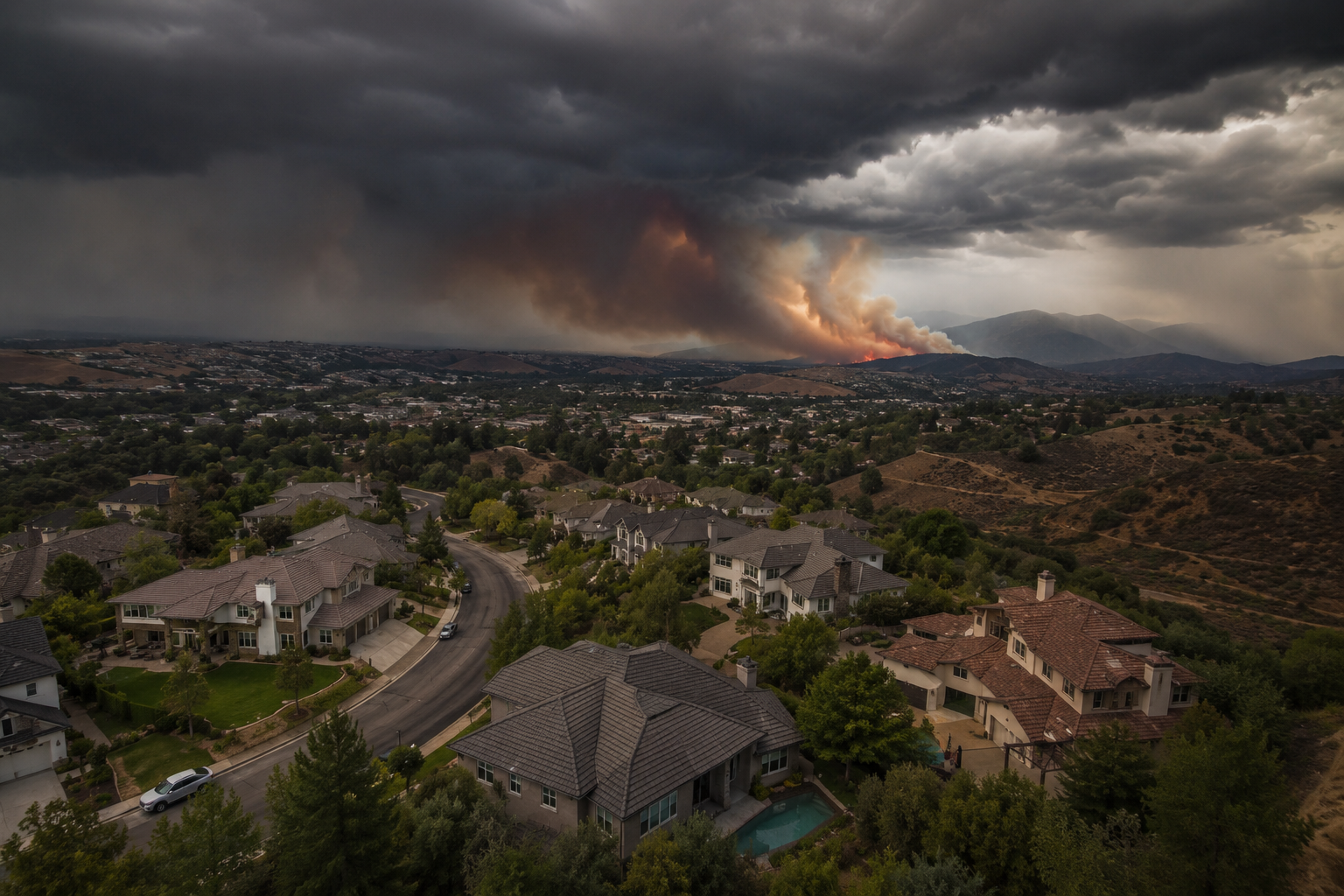
Wildfire Risk Is Reshaping Western Insurance Markets
California has become one of the clearest examples of how disaster exposure can disrupt insurance markets.
Major wildfire seasons over the past decade have produced billions of dollars in insured losses. Entire communities have experienced catastrophic destruction within hours, forcing insurers to reconsider long-term exposure in fire-prone regions.
In response, some insurance providers have limited new policies in wildfire-heavy areas or tightened underwriting standards. Homeowners in forest-adjacent communities are increasingly required to maintain defensible space, upgrade roofing materials, or remove vegetation near structures.
For homeowners who cannot secure traditional private insurance, state-backed insurance programs are becoming more common — often at significantly higher costs.
The trend is no longer isolated to California. Parts of Oregon, Washington, Colorado, and even sections of the Southeast are seeing wildfire risk classifications expand as drought conditions and extreme heat intensify.
Hurricanes Continue To Drive Coastal Premiums Higher
Along the Gulf Coast and Atlantic shoreline, hurricane exposure remains one of the most expensive insurance risks in America.
The issue is not only storm frequency. It is also storm intensity.
Stronger hurricanes produce larger insured losses because modern coastal development places more expensive homes and infrastructure directly in vulnerable areas. Storm surge, wind damage, and prolonged flooding can generate billions in claims from a single landfall event.
Florida has become one of the most challenging insurance markets in the country. Several insurers have reduced operations or exited the state entirely following repeated storm losses and legal disputes over claims.
For homeowners, this means fewer policy options and rising premiums — particularly in coastal counties.
Even inland areas are not immune. Hurricanes increasingly produce severe rainfall flooding hundreds of miles from the coastline, expanding the geographic footprint of insurance exposure.
Flood Risk Is Expanding Beyond Traditional Flood Zones
One of the biggest misconceptions in home insurance is that flooding only affects coastal areas or FEMA-designated floodplains.
In reality, flash flooding and extreme rainfall are becoming major risks in suburban and inland communities across the country.
Urban development plays a major role. As cities expand and more land becomes paved, heavy rainfall has fewer natural drainage pathways. Water accumulates faster, increasing flood severity during major storms.
Future mid Ad Unit
Professional Integration Pending
Many homeowners discover too late that standard homeowners insurance typically does not cover flood damage.
Separate flood insurance policies may be required — and premiums for those policies are also rising in areas with repeated claims or updated flood risk assessments.
New flood modeling technologies are allowing insurers to evaluate risk at the property level rather than broad regional averages. While that improves pricing accuracy, it also means some homes may face substantial premium increases if localized flood exposure is identified.
Severe Storms And Hail Are Creating Hidden Costs
Not all insurance losses come from headline disasters like hurricanes or wildfires.
Severe convective storms — including hail, tornadoes, and damaging straight-line winds — are quietly becoming one of the insurance industry's largest financial burdens.
States such as Texas, Oklahoma, Nebraska, and Colorado experience frequent hail events that generate expensive roof replacement claims. Even moderate storms can produce widespread property damage across large suburban areas.
Insurers are responding with stricter roof age requirements, separate wind and hail deductibles, and premium adjustments based on localized storm history.
For homeowners, this means insurance costs may rise even without filing a claim personally. Regional loss trends increasingly influence underwriting decisions.
Why Some Insurers Are Leaving Certain Markets
In high-risk regions, insurers are not just raising prices. Some are reducing exposure altogether.
This happens when companies determine that long-term losses may outweigh potential profits. Regulatory constraints can also limit how quickly insurers are allowed to increase premiums, making certain markets financially difficult to sustain.
When insurers leave a state or reduce policy issuance, homeowners face reduced competition and fewer coverage options.
That can trigger a cycle where remaining insurers raise premiums further due to concentrated risk exposure.
State-backed insurance pools and last-resort insurance programs are becoming increasingly important in disaster-prone areas, but those policies are often more expensive and may provide narrower coverage than private-market alternatives.
What Homeowners Can Do To Reduce Risk
Homeowners cannot control weather patterns, but they can reduce vulnerability.
Insurance companies increasingly reward mitigation efforts that lower the likelihood or severity of damage.
Common risk-reduction measures include:
- Installing impact-resistant roofing materials
- Clearing vegetation around wildfire-prone homes
- Elevating utilities above flood levels
- Improving drainage systems
- Reinforcing garage doors and windows against hurricane winds
- Updating electrical and plumbing systems in older homes
Preparedness planning also matters.
Maintaining emergency supplies, documenting valuables, understanding evacuation routes, and monitoring local disaster risks can reduce financial disruption during severe events.
For buyers, insurance availability is also becoming an important part of real estate decisions. A lower-priced home in a high-risk area may carry substantially higher long-term insurance costs.
The Future Of Home Insurance May Look Very Different
The U.S. insurance market is entering a period of structural change.
As climate risks intensify and weather disasters become more expensive, insurers are relying on increasingly sophisticated models to evaluate exposure. Premiums are likely to continue rising in regions where severe events are becoming more frequent or more destructive.
For homeowners, understanding environmental risk is no longer optional.
Flood maps, wildfire zones, storm history, and regional climate exposure are becoming central factors in both home affordability and long-term property value.
The era of cheap insurance in high-risk areas may be ending.
And for many communities across the country, preparedness is quickly becoming part of financial survival.