
Future top Ad Unit
Professional Integration Pending
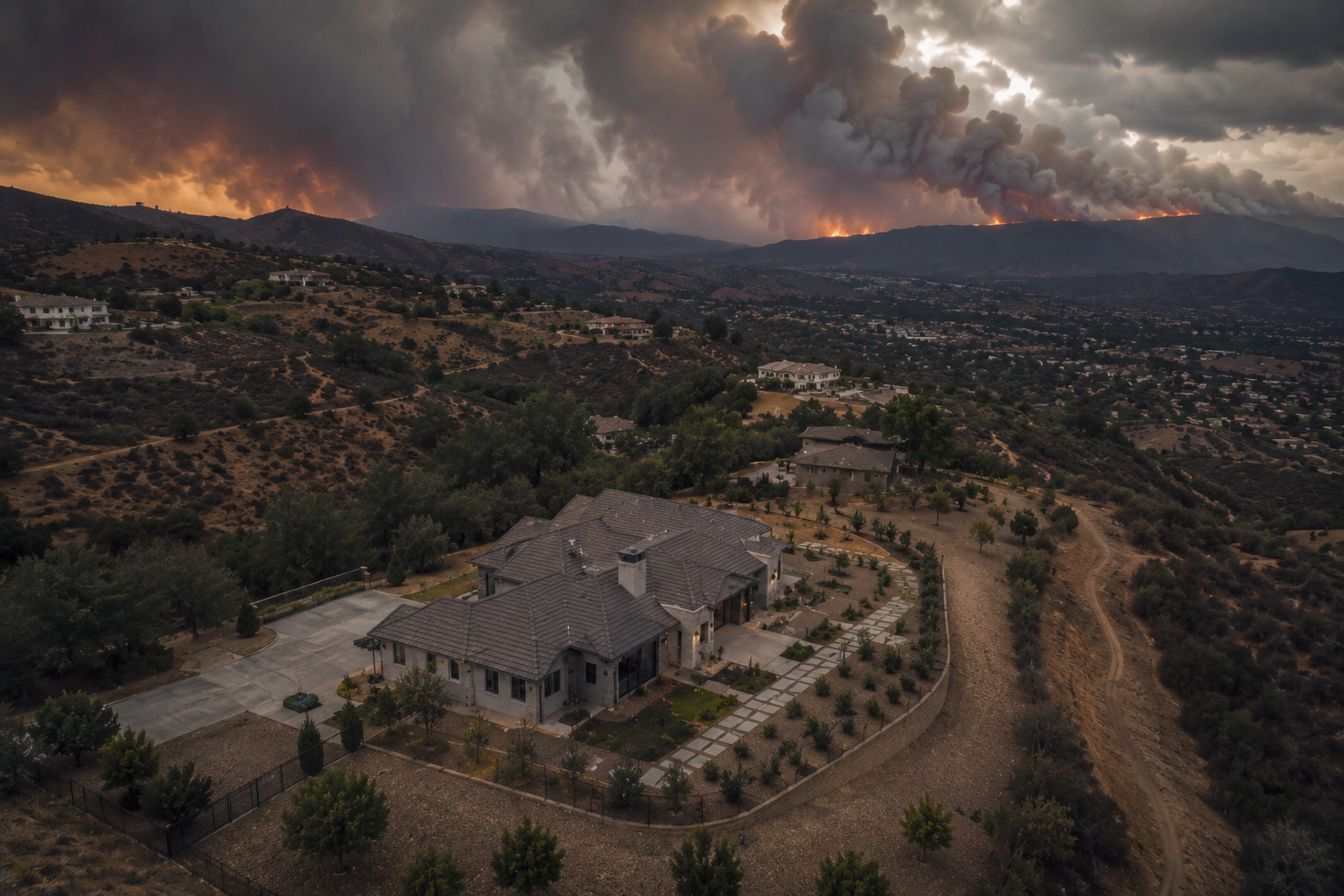
For years, wildfire risk in real estate was mostly associated with flames reaching homes directly. But a growing number of homeowners and buyers are now paying attention to something less visible — smoke.
Even properties located far from active wildfire zones can experience days or weeks of unhealthy air quality during severe fire seasons. In some parts of the western United States, smoke has become an expected part of summer and early fall. That shift is beginning to influence how people think about where they live, how much they are willing to pay, and what risks they are prepared to tolerate.
The relationship between wildfire smoke and property value is still evolving. Unlike flood zones or hurricane exposure, smoke risk is harder to measure on a property-by-property basis. But as climate-related concerns become more embedded in the housing market, air quality is increasingly part of the conversation.
Why Wildfire Smoke Matters Beyond Health
Most people associate wildfire smoke with respiratory problems, reduced visibility, and temporary disruptions. Those concerns are real, especially for children, older adults, and people with asthma or cardiovascular conditions.
But repeated smoke events also create secondary effects that can shape real estate markets over time.
Buyers may reconsider moving into regions known for recurring smoke seasons. Existing homeowners may face higher costs to maintain indoor air quality. Outdoor lifestyles — a major selling point in many western states — can become less attractive when smoke limits outdoor activity for weeks at a time.
In competitive housing markets, perception matters. And environmental perception can influence pricing even before official risk metrics catch up.
The Growing Link Between Climate Risk and Home Prices
Over the past several years, climate risk has become a larger factor in real estate analysis. Flooding, hurricanes, drought, and wildfire exposure are increasingly included in property disclosures, insurance models, and lending assessments.
Wildfire smoke fits into this broader trend.
Unlike direct fire damage, smoke risk affects a much wider geographic area. A city hundreds of miles from a wildfire may still experience hazardous air quality for extended periods. That means smoke-related concerns can influence markets that historically were not considered high-risk wildfire zones.
Some buyers now check annual air quality trends alongside school districts and commute times. Others specifically look for homes with upgraded HVAC systems, air filtration, or newer insulation that helps reduce indoor smoke intrusion.
This does not mean every smoke-prone area will automatically see falling home prices. Many regions with wildfire smoke exposure remain highly desirable and economically strong. But it does suggest that environmental resilience is becoming a more important part of property value conversations.
Insurance Costs Are Becoming Part of the Equation
Insurance availability already plays a major role in wildfire-prone regions. In some states, insurers have reduced coverage offerings or increased premiums in areas with elevated fire exposure.
Smoke itself may not directly determine insurance pricing, but it contributes to the broader wildfire risk environment insurers evaluate.
When insurance becomes more expensive or difficult to obtain, affordability changes. That can affect both current homeowners and future buyers.
Mortgage lenders also pay attention to insurance access. If certain regions become harder to insure over time, financing conditions could gradually shift as well.
For buyers comparing multiple properties, long-term operating costs increasingly matter just as much as the purchase price.
Buyer Psychology Is Changing
Real estate decisions are emotional as much as financial.
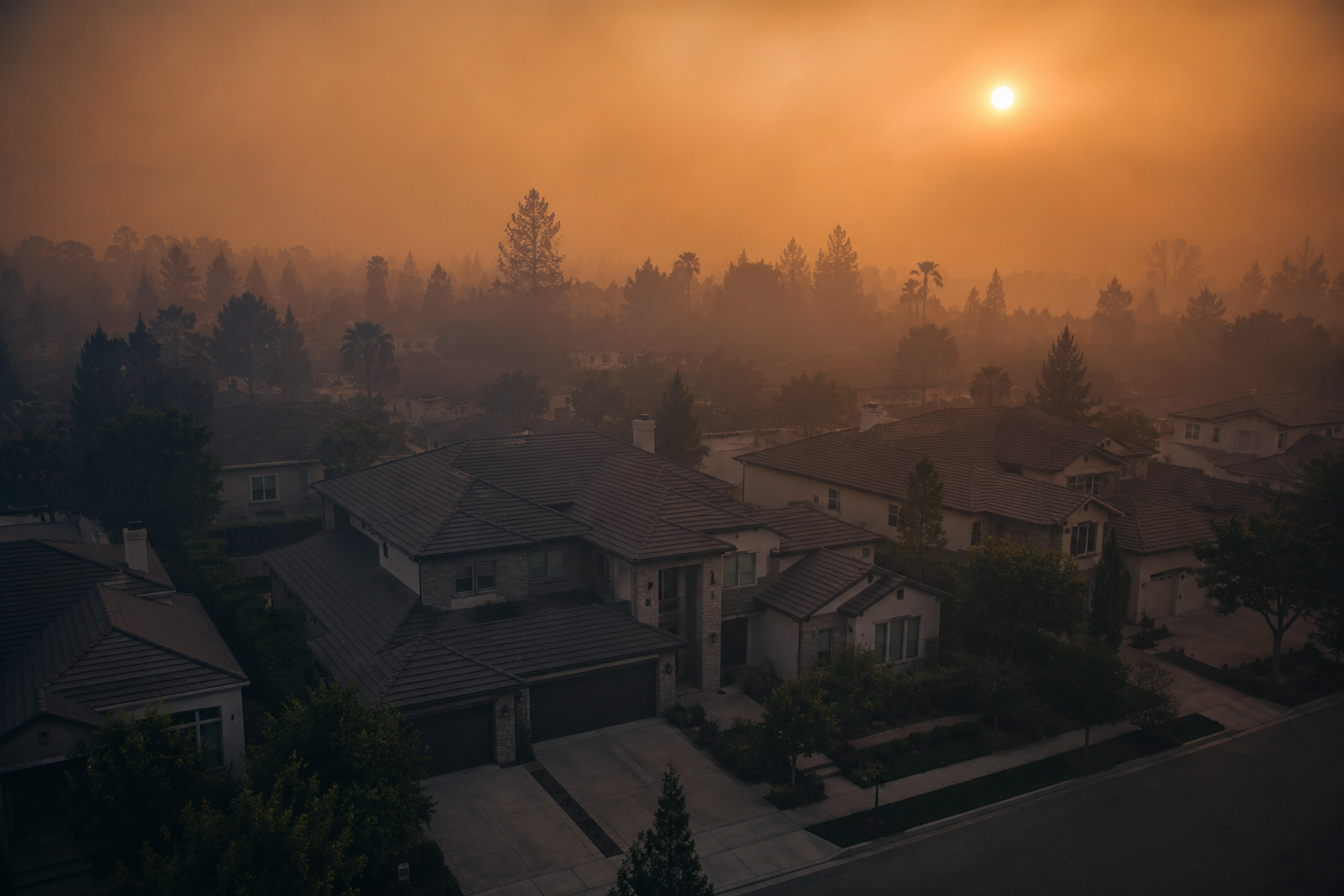
A home with beautiful mountain views may lose some appeal if those views disappear behind smoke haze every summer. Outdoor patios, hiking access, and backyard amenities become less valuable when air quality warnings discourage spending time outside.
This shift in perception is subtle, but important.
In some areas, residents are adapting by treating smoke season the way others treat winter storms or hurricane season — an inconvenience that requires preparation. In other regions, especially where smoke events are becoming more frequent unexpectedly, buyers may become more cautious.
Remote work has also changed relocation patterns. Some households now have greater flexibility to move based on environmental quality-of-life preferences rather than proximity to a physical office.
That means climate comfort, including cleaner air, may influence migration patterns more than it did a decade ago.
Indoor Air Quality Is Becoming a Home Feature
One notable trend is the growing importance of indoor air resilience.
Future mid Ad Unit
Professional Integration Pending
Homes equipped with modern filtration systems, sealed windows, newer HVAC infrastructure, and air purification setups may become more attractive in smoke-prone regions.
This mirrors how flood-resistant construction or hurricane shutters became selling points in other disaster-prone areas.
Buyers increasingly ask practical questions such as:
- How well does the home handle smoke infiltration?
- Does the HVAC system support high-efficiency filters?
- Are there portable air purifiers included?
- Has the property experienced previous smoke damage?
While these features may not dramatically raise property value on their own, they can influence buyer confidence and perceived livability.
Smoke Exposure Can Affect Maintenance Costs
Wildfire smoke does not only impact air quality. Prolonged smoke exposure can also affect homes physically.
Ash and fine particles may accumulate on roofs, siding, HVAC systems, solar panels, and ventilation components. Smoke odors can sometimes penetrate interiors, fabrics, and ductwork after severe events.
Homeowners in heavily affected regions may face:
- More frequent HVAC filter replacements
- Additional deep cleaning costs
- Exterior maintenance from ash accumulation
- Reduced efficiency of outdoor systems or equipment
Again, these costs are usually manageable individually. But over time, they contribute to the broader economic picture of living in smoke-affected regions.
Not Every Market Responds the Same Way
It is important not to oversimplify wildfire smoke risk.
Some high-demand housing markets continue to grow despite worsening smoke seasons. Strong local economies, limited housing supply, and desirable lifestyles still outweigh environmental concerns for many buyers.
Luxury mountain communities, coastal western cities, and fast-growing suburban areas often retain strong pricing power even during difficult wildfire years.
However, real estate markets operate on long timelines. Risks that seem secondary today can become more influential over decades as buyer expectations evolve.
Flood disclosure laws, hurricane resilience standards, and energy efficiency ratings all became more prominent gradually. Smoke risk may follow a similar path.
Climate Risk Transparency Is Increasing
One major shift is the growing availability of environmental risk data.
Many homebuyers now encounter climate risk scores during online property searches. Air quality history, wildfire exposure maps, drought trends, and insurance risk assessments are becoming more accessible to consumers.
This increased transparency may shape future pricing behavior.
Properties with lower environmental risk exposure could gain competitive advantages over time, especially among buyers prioritizing long-term resilience.
For homeowners, understanding local smoke trends is becoming part of responsible property planning rather than just emergency preparation.
What Homeowners Can Do
Homeowners cannot control wildfire smoke patterns, but they can improve preparedness and reduce indoor exposure risks.
Some practical steps include:
- Upgrading HVAC filtration systems
- Using portable HEPA air purifiers
- Sealing gaps around windows and doors
- Monitoring local air quality indexes regularly
- Creating indoor clean-air spaces during smoke events
Preparedness does not eliminate risk entirely, but it can improve comfort, health protection, and potentially long-term property appeal.
In markets where smoke seasons are becoming more common, resilience features may eventually matter more to future buyers.
The Bigger Picture
Wildfire smoke is becoming part of a larger national conversation about climate adaptation and real estate resilience.
The housing market has always reflected changing risks — whether economic, environmental, or demographic. Smoke exposure adds another layer to how buyers evaluate quality of life, long-term costs, and future uncertainty.
For now, wildfire smoke alone is unlikely to redefine entire housing markets overnight. But in combination with insurance pressures, climate migration trends, and evolving buyer preferences, it may gradually shape property values in ways that become more visible over time.
Understanding those risks early helps homeowners and buyers make more informed decisions — not driven by fear, but by awareness.